
Who is Michiel Das?
They say that the "about me" section is always one of the most visited pages of a website, but at the same time it's also one of the most difficult ones to write.
They're right.
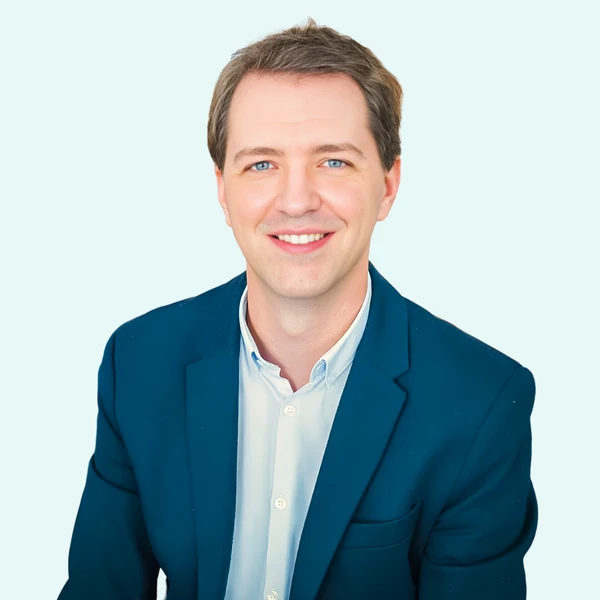
After several hours of updating this section, I've managed to summarize a few things about me, starting obviously with the (almost mandatory) professional picture wearing a suit.
My name
As you've surely already noticed by my exotic name, I am not from Spain. I was born and raised in Belgium, and I guess my parents never imagined that I would end up in Barcelona (if not they'd probably have chosen a more international name).
On the other hand it offers one big advantage though, because just like that you've already learned your first Flemish/Dutch word!
Who am I?
As a young student, I wasn't sure what I wanted to do when I grew up, because I liked math but I was also passionate about communication and advertising. During the last year of high school I realized that math in the end wasn't what motivated me the most, and I started studying Communication Sciences, specializing in marketing and persuasive communication.
During the last year of my Bachelor I had the opportunity to do an Erasmus exchange for 6 months in Barcelona, and I fell in love with the city.
I did everything I could to return to Barcelona as quickly as possible, and after many emails and phone calls to my university, they gave me a scholarship to do my internships in Barcelona as well.
After my internships finished I went back to Belgium to pursue my Master in Management, but by then I knew my place was in Barcelona, so my parents soon realized that I was not going to stay forever in Belgium.
After returning to Barcelona again I started working for a Belgian entrepreneur until I got my first job in a startup in the photo printing industry.
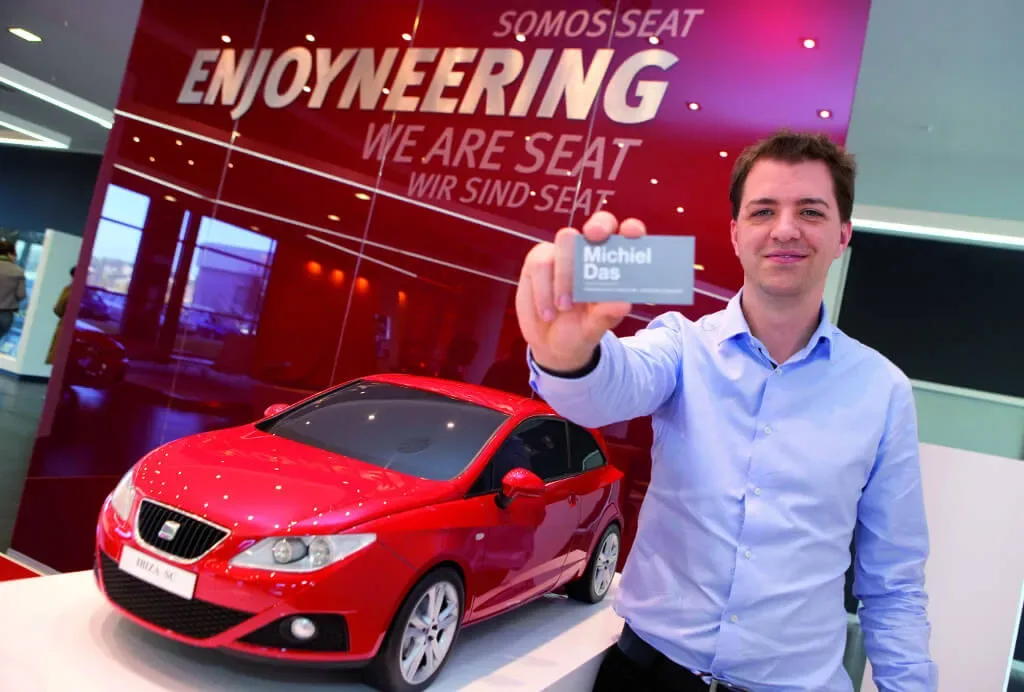
After suddenly losing my job due to Spain's economic crisis, I decided to create three business cards and let them travel through Spain with the idea of finding a job thanks to the theory of the Six Degrees of Separation.
Thanks to my project I got the job I was looking for, and I started working as SEAT's Employer Branding Manager, where I took care of the strategies and actions to turn the company into an attractive employer.
My project also opened many doors for me, and I had the opportunity to explain my idea and the importance of Personal Branding in several conferences and national and international news outlets.
So what do I do now?
I have been in marketing for 17 years, across startups, SMEs and multinationals. Each type of organisation has its own challenges, and what works in one cannot be copy-pasted into the next.
-
 2012 - 2018
At SEAT I stayed almost nine years, in three different roles: first running employer branding, until the company was recognised as a Top Employer in Spain; then global SEO and SEM across eight European markets, with a team of 17 people and a 20M budget; and finally the digital launch of CUPRA in 2018.
-
 2018 - 2021
Then I moved into urban mobility. As CMO at XMOBA we scaled the ridesharing platforms past 250,000 users, and from there I became Global Head of Marketing & e-commerce at SEAT Urban Mobility: electric scooters in more than ten European markets and SEAT's first e-commerce built in under two months.
-
 2021 - 2026
Then came four years at Cuideo, in care services, as Chief Marketing & Growth Officer. I arrived with the company at Series A and we came out of it as a profitable Series B scale-up, owning the marketing P&L and presenting it to the Board.
What I am proudest of from those years is the brand work. We got Cuideo's monthly branded searches to nine times the volume of the most searched generic keyword in the sector, and 63% spontaneous brand recall in our core audience. In under two years we gathered more than 8,700 customer reviews averaging 4.8 out of 5, and in a business where people trust you with their parents, reviews weigh heavily in the decision.
In the funnel we got 43% more MQLs year on year while spending 29% less, 21% better MQL to SQL conversion and 26% better SQL to closed deal. We opened offices and pop-up venues across Spain, which lifted local lead generation by 63%, we ran B2B campaigns with Mapfre, DKV and AXA that drove B2B sales up 40%, and we launched the e-commerce, a revenue line that did not exist before. All of it mixing online and offline: Google, Bing, national and local TV, and radio.
-
 2026 - today
Since April 2026 I have been AI-First Chief Marketing & Revenue Officer at Service Club ®, the global ecosystem that sources, trains, dispatches, verifies and rewards professional drivers in logistics and last-mile delivery, and connects them with companies like Amazon, Uber and Evri. I run marketing and revenue for its five products (Jobs, Academy, Dispatch, Compliance and Perks), with a network of more than 8 million drivers, a presence in 20+ countries and seven core markets (UK, Spain, Germany, France, Italy, the Netherlands and the United States), reporting to the CEO.
My role is that of a full-scope CMO (positioning and brand, data, growth and the marketing P&L) with the focus on revenue: CRO and RevOps so acquisition scales from one market and one continent to the next. I use AI as an operating model: website, campaigns, CRM, calls, outreach and analytics connected to each other, agents handling the repeatable work and a small team that spends its time deciding. I explain it in detail in how I work as a CMO.
Along the way I never stopped teaching: over thirteen years and some 10,000 students at schools like EADA, ISDI, The Valley and EU Business School. And through Das Venture Lab I have invested in a handful of European startups (Plum, Mintos, Velca, Heura, 900.care), which is my way of keeping a finger on what is coming. The full portfolio is on dasventurelab.com.
I am still in Barcelona, which deep down was the plan from that Erasmus onwards.
Method
How I work as a CMO
To me, marketing starts with knowing what you want people to think of your brand and ends on the P&L. My job is to position the brand, decide with data where to grow, build the team and the system that make it possible, and answer for the result in revenue.
What I do as a CMO
-
Brand and positioning
A strong brand makes acquisition cheaper. I define what customers should think of the company and protect it at every touchpoint. At Cuideo, branded searches reached nine times the volume of the sector's generic keyword, and it showed in what each customer cost.
-
Data to decide
Every major decision rests on data: which channel works, which customer is profitable and where the funnel leaks. That is why the first thing I set up is reliable measurement.
-
Growth and acquisition
I look for the channels that scale, from SEO and paid to partnerships and outbound, and test them fast: what works gets budget, what does not gets stopped.
-
Strategy and P&L
I decide with the CEO and the board where to grow: which markets, which products, which customers and with what budget. I own the marketing P&L and what it adds to the bottom line.
-
End-to-end revenue
I treat acquisition, conversion and retention as one funnel. Marketing, sales and operations share goals and numbers, and conversion is worked on at every step of the funnel, including outside the website.
-
Team and organisation
I design the organisation from the strategy: acquisition, marketing ops, brand and comms, and go-to-market to enter new markets. Small teams, with a clear owner for every number.
An AI operating model
I use AI to change how the whole organisation works, so that everything is connected to everything and the team spends its time deciding.
-
Everything connected to everything
Website, campaigns, CRM, calls, outreach and analytics talk to each other. What comes in through one channel reaches all the others without anyone copying it, and every action comes back with its result.
-
A small team with global reach
Opening a market no longer means building a local team from scratch. Website, campaigns and prospecting are adapted and launched with the same system, in each country's language.
-
AI agents for the repeatable work
The repeatable work (reports, data, first replies, follow-ups) is done by AI agents. The team keeps strategy, creativity and the conversations that close deals.
-
Everything is measured in revenue
Every channel is judged by what it adds to sales and margin; clicks and leads are intermediate steps. That is why marketing ops and RevOps sit at the heart of the team.
Tools
The tools I use to build and connect the marketing and revenue system.
Generative AI
-
 Claude
-
 ChatGPT / OpenAI
-
 Higgsfield
-
 Magnific (Freepik)
-
 ElevenLabs
Web, design and development
-
 Figma
-
 VS Code
-
 Astro
-
 GitHub
-
 Cloudflare
Campaigns
-
 Google Ads
-
 Meta Ads
-
 LinkedIn Ads
-
 Baker
-
 Canva
Analytics and measurement
-
 Google Analytics 4
-
 Search Console
-
 Tag Manager
-
 Looker Studio
CRM, data and prospecting
-
 HubSpot
-
 Clay
-
 Apollo.io
-
 Tally
Conversations and outreach
-
 Aircall
-
 WATI
-
 360dialog
-
 Smartlead
Automation and team
-
 n8n
-
 Make
-
 Notion
-
 Slack
Need this in your company?
I support a select group of companies as a fractional CMO, always putting quality first. It fits when a few hours a month are enough to show in their results:
-
Revenue diagnosis
I review your funnel, from first visit to sale, and tell you where revenue leaks and in which order to fix it.
-
Designing the operating model
Organisation, processes and systems connected with AI, so your team can grow without headcount growing at the same pace.
-
Backing a founder or CMO
Regular sessions to decide priorities, budget and team with someone who has been there before.
Areas I work on as a fractional CMO
- GTM strategy and positioning
- Revenue operations and systems
- Content and growth
Why this website?
One of the most important things I discovered is how you can turn an idea into a creative project that allows you to differentiate yourself from others.
Another important lesson I learned is that it is better to depend as little as possible on only one employer, because the day you're without a job you also run out of income.
Knowing how to turn ideas into reality and make an income from them motivates me, and it also gives me peace of mind: if I lose my job one day, I know how to earn money on my own.
I believe that everyone has the potential to start the projects or dreams they have, and that many times the problem is just finding out how to do it, and how to differentiate yourself creatively from others.
Questions… and answers
Which book do you recommend?
"The 4-Hour Workweek" by Tim Ferriss, a must-read for anyone who wants to improve their professional life.
Which website matters most to you?
www.elviajedemitarjeta.com because it is the project that started everything for me.
Which song do you hear every day?
The soundtrack of Batman (from the series of the 1960s), more than anything because it is the song of my alarm clock so I have to listen to it every day. I saw the series once and it made me laugh a lot, so it puts me in a good mood to start the day.
Where do you like to live?
Barcelona, since I came here on Erasmus in 2007 I have been in love with the city. What I love the most is the excellent combination of culture with nature and a dynamic metropolis.
Which hero do you admire?
Elon Musk (but only until the year 2020), because he is one of the most innovative entrepreneurs who's also a big fan of renewable energy. He was one of the founders of PayPal, and is currently the owner of Tesla (the largest manufacturer of luxury electric cars in the world).
What's your passion?
Coming up with ideas and creative solutions for day-to-day problems. I have a list in Notion with cool ideas that I would like to launch some day, and in my spare time I am working on them.
What's your biggest fear?
Losing the motivation to learn and discover new things (how philosophical).
What's your greatest accomplishment?
Coming to Barcelona and trying to build a stable life here. I recommend it to everyone, it's a great adventure.
When did you last blush?
Belgians never blush.
What talent would you like to have?
Being able to guess the winning numbers of the lottery wouldn't be bad.
What would you come back as?
Anything except a mayfly (an insect that only lives one day). Imagine being born, celebrating your birthday and dying on the same day, and getting out of bed on the wrong foot that very day (not that you technically have feet).
Who would you have liked to be?
Tim Berners-Lee, who at 34 created the World Wide Web. It must be very exciting to know that deep down you are the one who made the creation of Facebook, Google and eBay possible.
What's your best lesson?
Trying, failing… and keeping going anyway!
More about me
- I'm very interested in the world of startups, and I'm always testing new ideas.
- I speak Flemish/Dutch (my mother tongue), English, Spanish, French, Catalan and some German.
- I love giving talks and classes. As a speaker and lecturer I talk about growth marketing and CRO, SEO and SEM, data-driven marketing, brand and employer branding, and how to test ideas and launch successful startups. So if you're looking for a speaker for your next event and I fit the profile, don't hesitate to reach out.
Thanks for stopping by!