
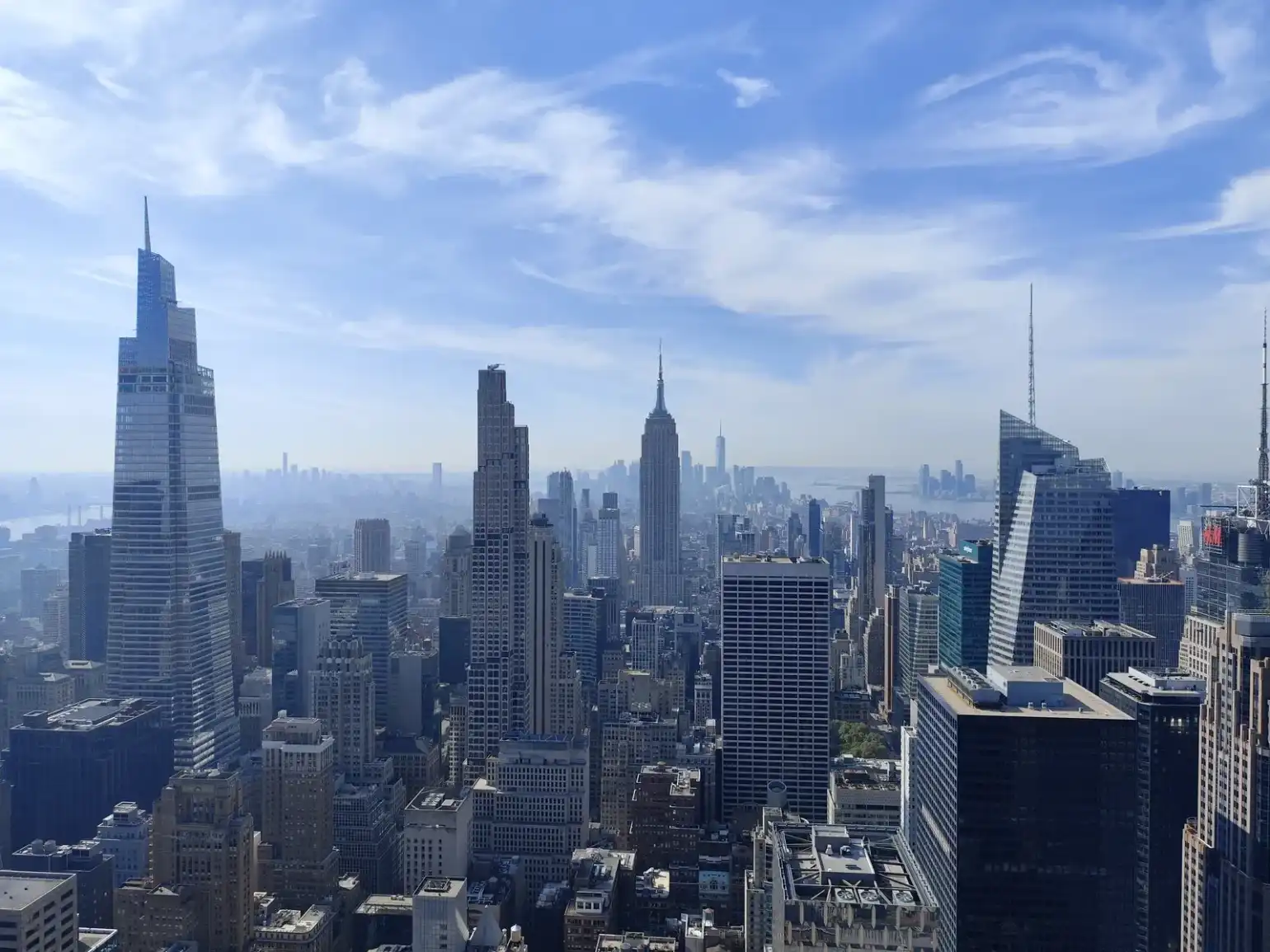
Twelve years ago I put together a 7-day itinerary for New York, and ever since I've been emailing it to everyone who asked me for advice about their trip to the Big Apple. I went back recently, and when I read that document again I realised half of it was out of date: the MetroCard is gone, several of the restaurants have closed and some things that used to be free now cost money. So I rewrote it from scratch for 2026. Below you'll find the itinerary day by day, with the time I'd recommend arriving at each stop, how to get from one stop to the next, the price, the opening hours and a map, followed by the 9 tips I keep giving to first-time visitors.
How this 7-day itinerary works
Each day covers one part of the city, so you spend your time seeing things instead of sitting on the subway. The stops are in walking order, with a suggested arrival time and, between each one, how to get there and how long it takes. Every day also has a button that opens the full route in Google Maps, so you can follow it on your phone.
For every stop I give you the price of an adult ticket in 2026 and the opening hours. Almost every attraction uses dynamic pricing, so read it as a starting price: a Saturday at sunset always costs more than a Tuesday morning. Also, add 8.875% sales tax to everything you buy in New York, because it isn't included in the price you see. For the restaurants I add the Tripadvisor rating and what people mention most in their reviews.
| Day | Area | Highlights | Tickets approx. |
|---|---|---|---|
| 1 | Midtown | Grand Central, the library and sunset from Top of the Rock | $42 |
| 2 | Lower Manhattan | Statue of Liberty, Wall Street and the 9/11 Memorial | $26 to $62 |
| 3 | Central Park and Upper West Side | Natural History Museum, Central Park by bike and the tramway | $55 to $80 |
| 4 | Chelsea and Hudson Yards | Little Island, the High Line, the Intrepid and a musical | from $80 |
| 5 | Brooklyn | Brooklyn Bridge, DUMBO and Williamsburg | $5 to $10 |
| 6 | Downtown | Flatiron, the Village, SoHo, Chinatown and the Empire State at night | $46 |
| 7 | Your choice | Governors Island, Coney Island or the Brooklyn Botanic Garden | $0 to $25 |
For food, budget around $60 to $90 per person per day if you mix pizza slices, delis and one sit-down dinner. Transport tops out at $35 a week (I explain how in tip 3). And if you haven't decided when to go yet, further down you'll find what each season has to offer.
Day 1: Midtown, from Times Square to sunset at Top of the Rock
Day one is Midtown: the skyscrapers, the postcards and most of the hotels. Everything is within a 15-minute walk, so you won't need the subway once. The day is built around one fixed time: sunset at Top of the Rock, which you need to book in advance (around 8:30pm in summer, 6:30pm in autumn and before 5pm in winter). If you're going in winter, move Fifth Avenue earlier and go up sooner.
All on foot, about 6 km. Tickets: $42 (Top of the Rock).
Open the day's route in Google Maps7-minute walk: head down Sixth Avenue to 47th Street and turn right towards Broadway.
8-minute walk: head down Sixth Avenue to 42nd Street and enter Bryant Park, right behind the library.
6-minute walk: carry on east along 42nd Street and enter the station from Vanderbilt Avenue.
2-minute walk: leave by the Lexington Avenue exit and cross to the corner of 43rd Street.
15-minute walk: head up Lexington Avenue to 50th Street and walk west, across Park and Madison, to Fifth Avenue.
When you come out, head north up Fifth Avenue: the shops start at the door.
10-minute walk: back down Fifth Avenue and into Rockefeller Center through the Channel Gardens at 50th Street.
5-minute walk: out onto Sixth Avenue, up to 51st Street, and left to Broadway.
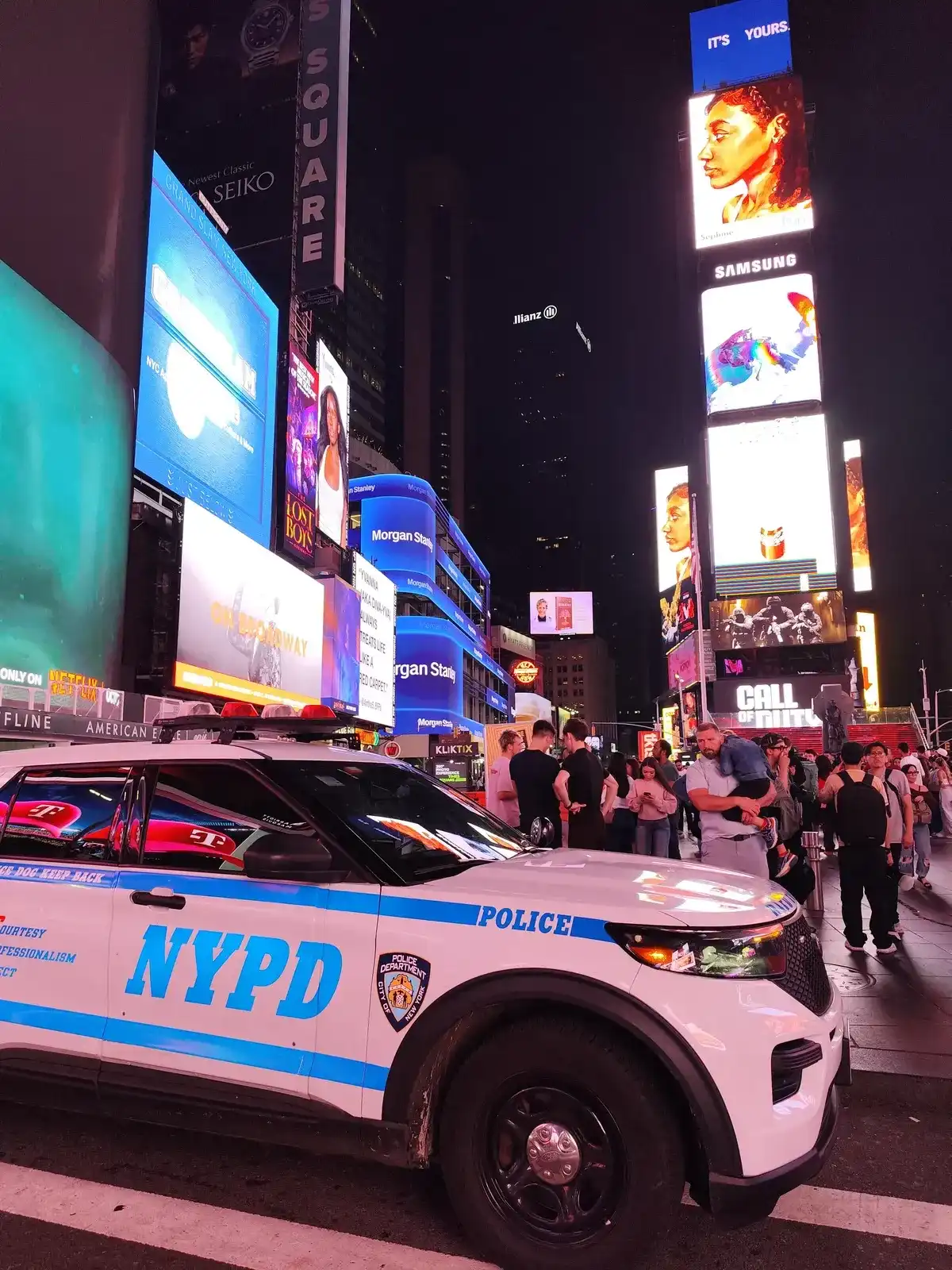
When you leave the diner, Times Square is five minutes away. With the screens lit up is when it impresses most.
Day 2: Lower Manhattan, the Statue of Liberty, Wall Street and 9/11
On day two you head to the southern tip of Manhattan, where the city began. Take the first ferry to the Statue of Liberty, because from mid-morning the security queues get long. Then walk back via Wall Street to the World Trade Center, and finish at the Memorial as night falls.
Getting there: subway 1 to South Ferry or 4 and 5 to Bowling Green. Then all on foot, except the ferry to the islands. Tickets: $26 (Statue) and from $24 if you visit the 9/11 Museum.
Open the day's route in Google Maps3-minute walk through the park to Castle Clinton, the round fort where the ticket office and boarding are.
Back in Battery Park, a 5-minute walk north to Bowling Green, where Broadway begins.
4-minute walk: up Broadway and right onto Wall Street.
12-minute walk: along Wall Street to Broadway, up to Liberty Street and west towards the river to Brookfield Place.
5-minute walk: cross West Street by the footbridge or the lights at Liberty Street and you're at the Memorial.
When you leave the museum, a 2-minute walk to the Oculus, on the east side of the plaza.

Subway R or W from Cortlandt St to Canal St (two stops) and an 8-minute walk east along Canal Street. On foot it's about 25 minutes.
Day 3: Central Park, a museum and the Roosevelt Island Tramway
A day of park and museum on the west side of Central Park. Pick one of the two big museums, because nobody can handle both on the same day, and save the afternoon for riding around the park by bike. The day ends crossing the East River on the Roosevelt Island Tramway, which is public transport and costs the same as a subway ride.
Getting there: subway B or C to 81 St-Museum of Natural History. Then on foot or by bike through the park. Tickets: $37 (museum), about $25 for the bike and $3 for the tramway.
Open the day's route in Google Maps 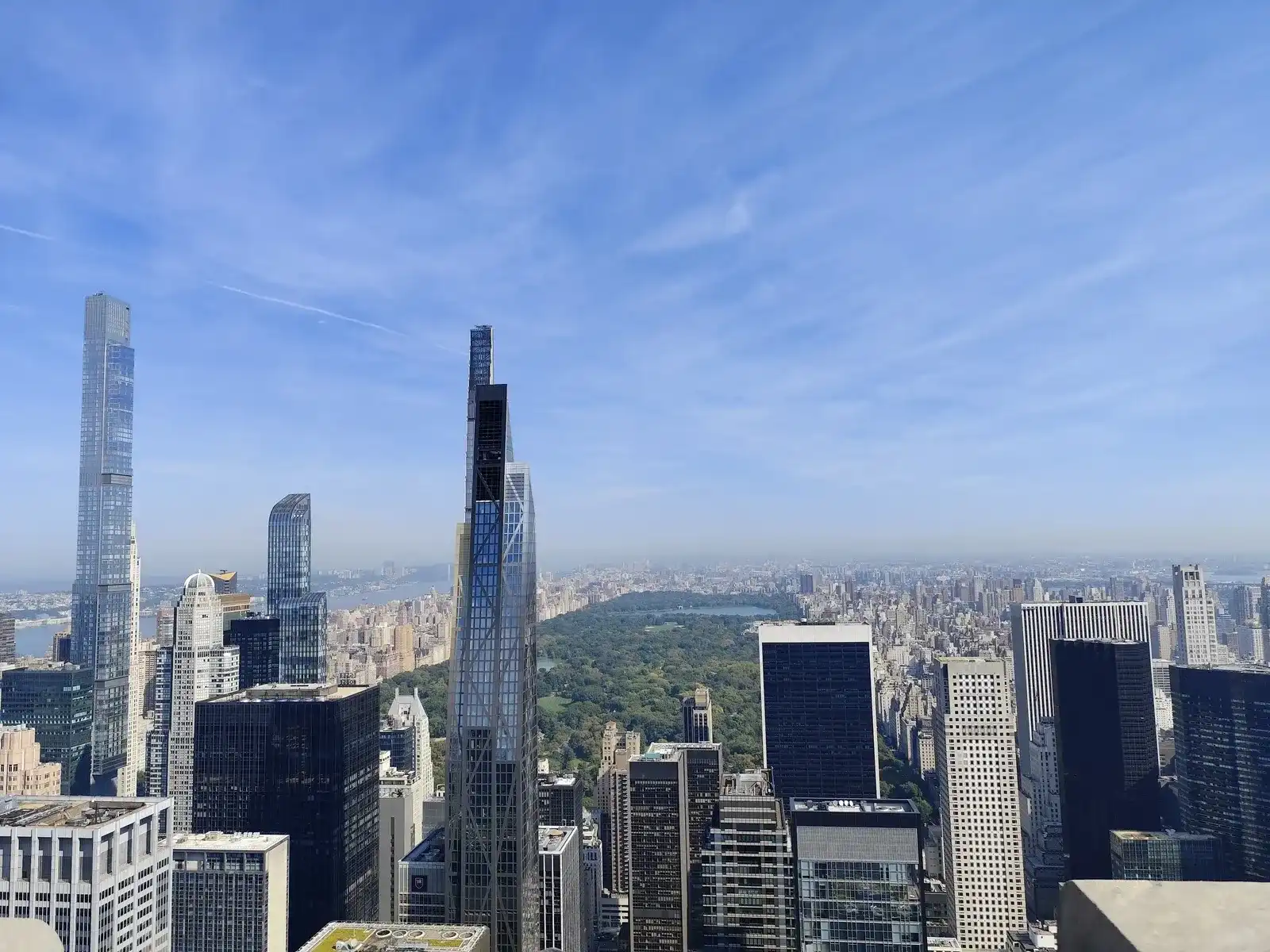
3-minute walk: out through the Columbus Avenue exit and down to 77th Street.
8-minute walk to the 72nd Street entrance, next to the Dakota building. There are Citi Bike stations and rental shops right there.
Return the bike at the south-east corner of the park (59th Street and Fifth Avenue) and walk 15 minutes east along 59th Street to Second Avenue.
Day 4: Chelsea, Little Island, the High Line, the Intrepid and a Broadway show
This is the most complete day of the itinerary. You walk the west side of Manhattan from south to north, almost always along the Hudson River: a floating park, a railway turned into a garden, the city's newest neighbourhood and an aircraft carrier. In the evening, Broadway.
Getting there: subway C or E to 23 St. Then all on foot, about 8 km. Tickets: free until the show (from about $80 with TKTS). Another $42 if you go up the Edge.
Open the day's route in Google Maps10-minute walk down Ninth Avenue to 15th Street.
8-minute walk: out onto Tenth Avenue, down to 13th Street and across the West Side Highway at the lights to the river.
3-minute walk to the Gansevoort Street stairs, the southern start of the High Line.
The High Line ends right in Hudson Yards, at 30th Street.
20-minute walk north along the Hudson River Greenway, the riverside path, to Pier 86 (46th Street).
20-minute walk east along 46th Street to Times Square.
10-minute walk to Ninth Avenue, in Hell's Kitchen, the neighbourhood of pre-theatre restaurants.
Day 5: Brooklyn, from the Brooklyn Bridge to Williamsburg
Brooklyn deserves a whole day. You walk across the bridge first thing, spend the morning in DUMBO and Brooklyn Heights, eat the best pizza of the trip and in the afternoon take the ferry up to Williamsburg, the neighbourhood where everything is happening.
Getting there: subway 4, 5 or 6 to Brooklyn Bridge-City Hall. On foot to Juliana's, then the ferry to Williamsburg ($4; $5 from 19 October 2026).
Open the day's route in Google MapsWhen you come off the bridge, take the first exit towards DUMBO and walk 10 minutes along Washington Street towards the river.
15-minute walk up Old Fulton Street and Columbia Heights, between 19th-century houses.
15-minute walk down to the water through the piers of Brooklyn Bridge Park, old cargo piers turned into parks.
2-minute walk to Old Fulton Street.
5-minute walk to the DUMBO/Fulton Ferry pier and the NYC Ferry East River route to North Williamsburg: about 13 minutes, with views of all three bridges. Boats every 15 to 30 minutes.
Day 6: Flatiron, Greenwich Village, SoHo, Chinatown and the Empire State at night
A day of neighbourhoods, with no queues or tickets until the evening. You walk down from the Flatiron to Chinatown through the liveliest parts of the city, and finish by going up the Empire State, which stays open late and is much quieter at night.
Getting there: subway R or W to 23 St. All on foot, about 7 km, and the F train up to the Empire State. Tickets: $46 (Empire State).
Open the day's route in Google Maps10-minute walk down Broadway to 14th Street.
8-minute walk down University Place to the north entrance of Washington Square.
10-minute walk west along Bleecker Street to Carmine Street.
15-minute walk: down Sixth Avenue, across Houston Street and east along Prince Street to Broadway.
5-minute walk east along Spring Street.
2-minute walk to Mulberry Street, then south.
15-minute walk north-east along Grand Street and Allen Street, through the Lower East Side, to Houston Street.
F train from 2 Av to 34 St-Herald Sq (five stops) and a 5-minute walk east along 34th Street.
Day 7: a free day depending on the season
I leave the last day open, because it depends on when you go and what time your flight leaves. These are the three options I recommend most, each for half a day.
When to go to New York: the best of each season
New York is worth it all year round, but each season is a different trip. This is what you'll find in each one, with dates for this year and next.
Spring (April and May)
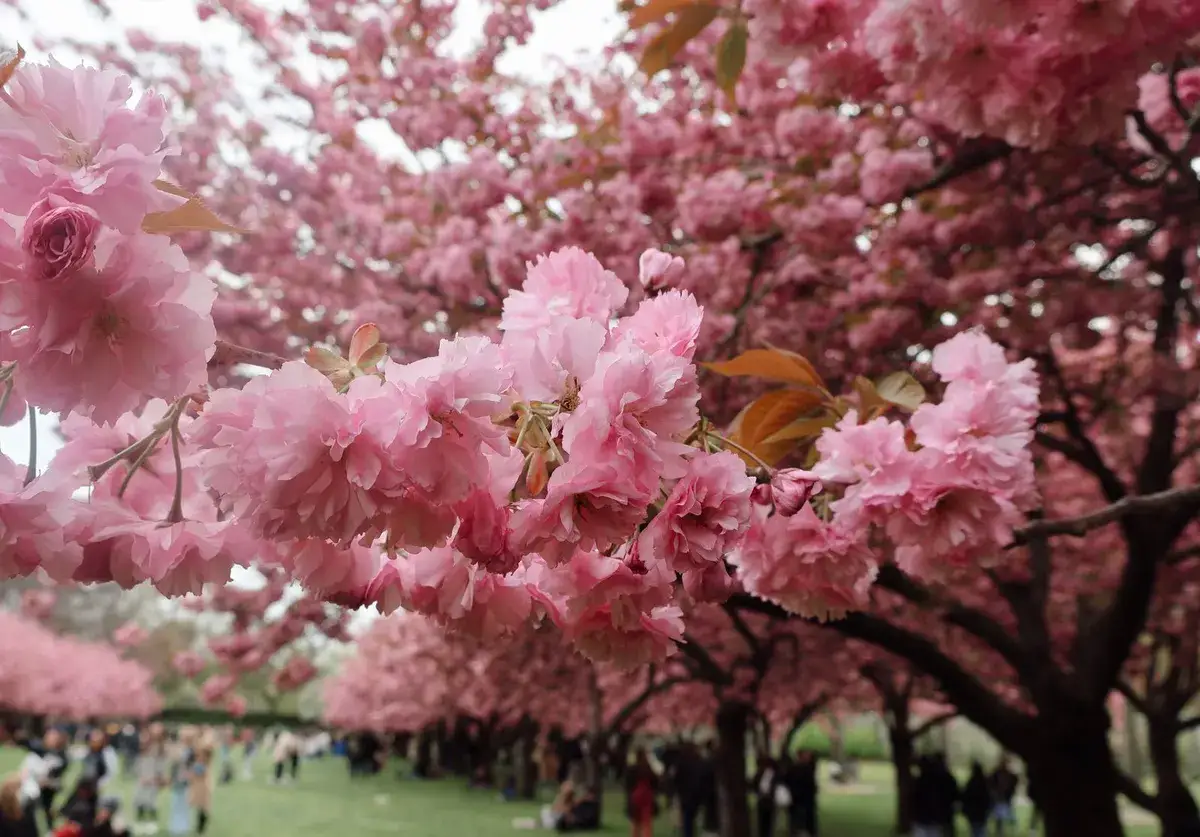
Temperatures of 17 to 22°C and the city coming out of winter. The cherry trees in Central Park are usually at their best between 10 and 20 April, and those in the Brooklyn Botanic Garden in late April. Outdoor terraces reopen, Smorgasburg starts its season in early April, and on Easter Sunday (28 March in 2027) Fifth Avenue fills with outrageous hats at the free Easter Parade. The downside: it rains often and hotels go up around Easter.
Summer (June to August)
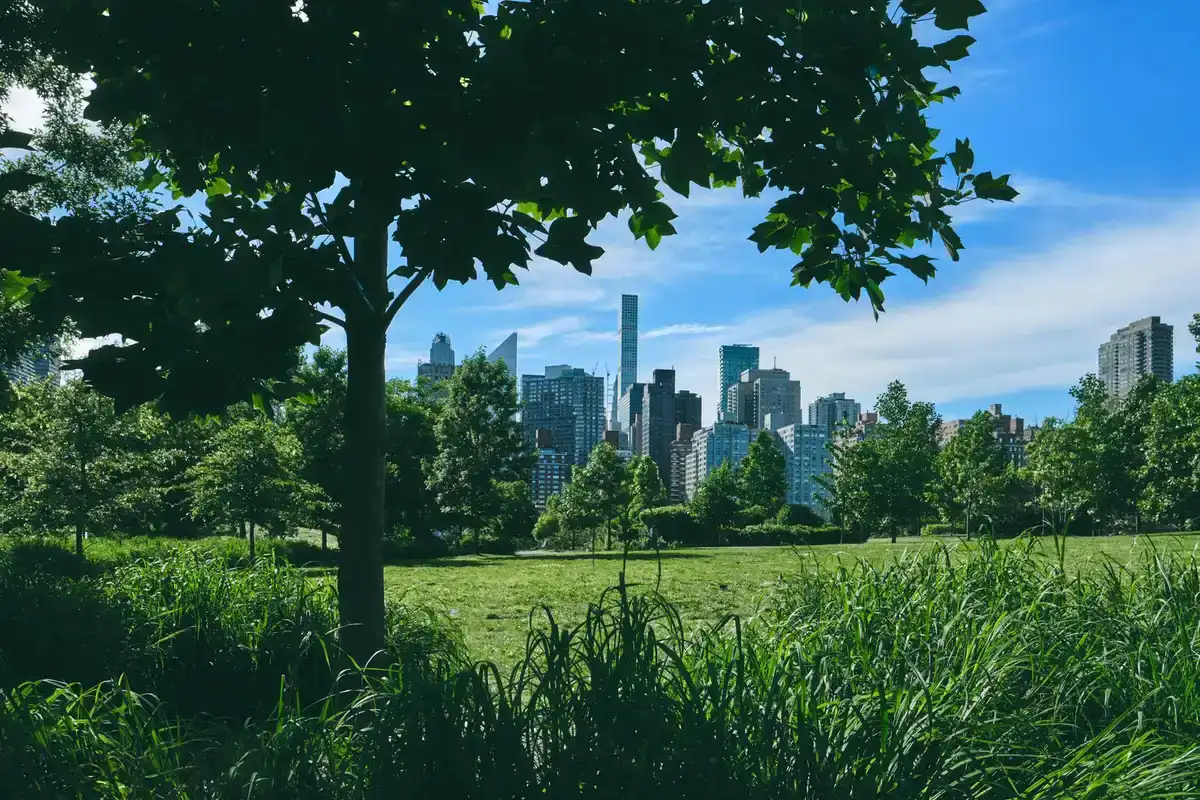
The city is green and full of free things outdoors: SummerStage concerts in Central Park and other parks (June to September), Shakespeare in the Park (free tickets through a lottery on the TodayTix app), Monday movie nights in Bryant Park (mid-July to mid-September) and the Macy's fireworks over the East River on 4 July. The beaches have lifeguards from late May to mid-September, and Coney Island is in full swing. The downside: around 29°C on average with lots of humidity, expensive hotels, and in August many New Yorkers leave on holiday.
Autumn (September to November)
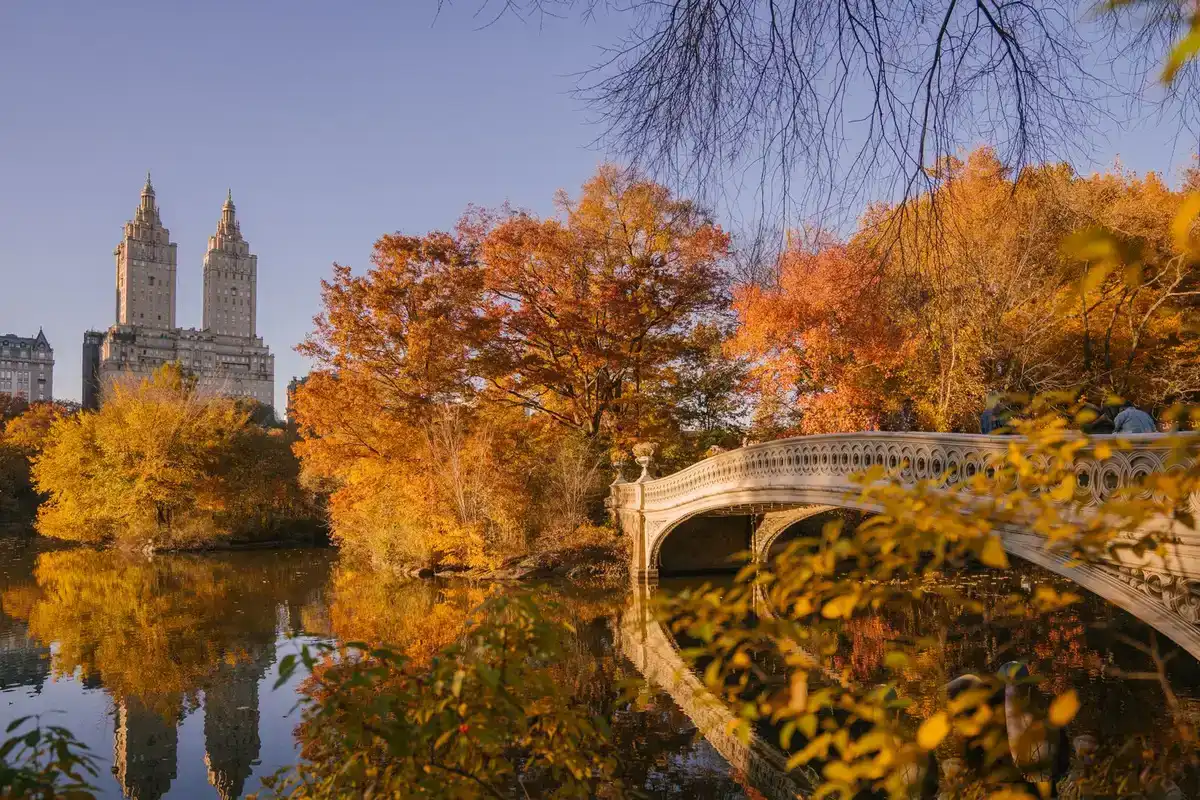
The most pleasant season: September is around 24°C and October 18°C, with clear days. The trees in Central Park change colour mostly in early to mid-November. There are three big dates: the Village Halloween Parade (31 October, along Sixth Avenue), the New York City Marathon (the first Sunday of November; 1 November in 2026) and the Macy's Thanksgiving Day Parade (26 November 2026, its 100th edition). In mid-October, the Open House New York weekend opens buildings for free that you can't visit the rest of the year. The downside: Luna Park and the Coney Island rides close on 31 October.
Winter (December to February)
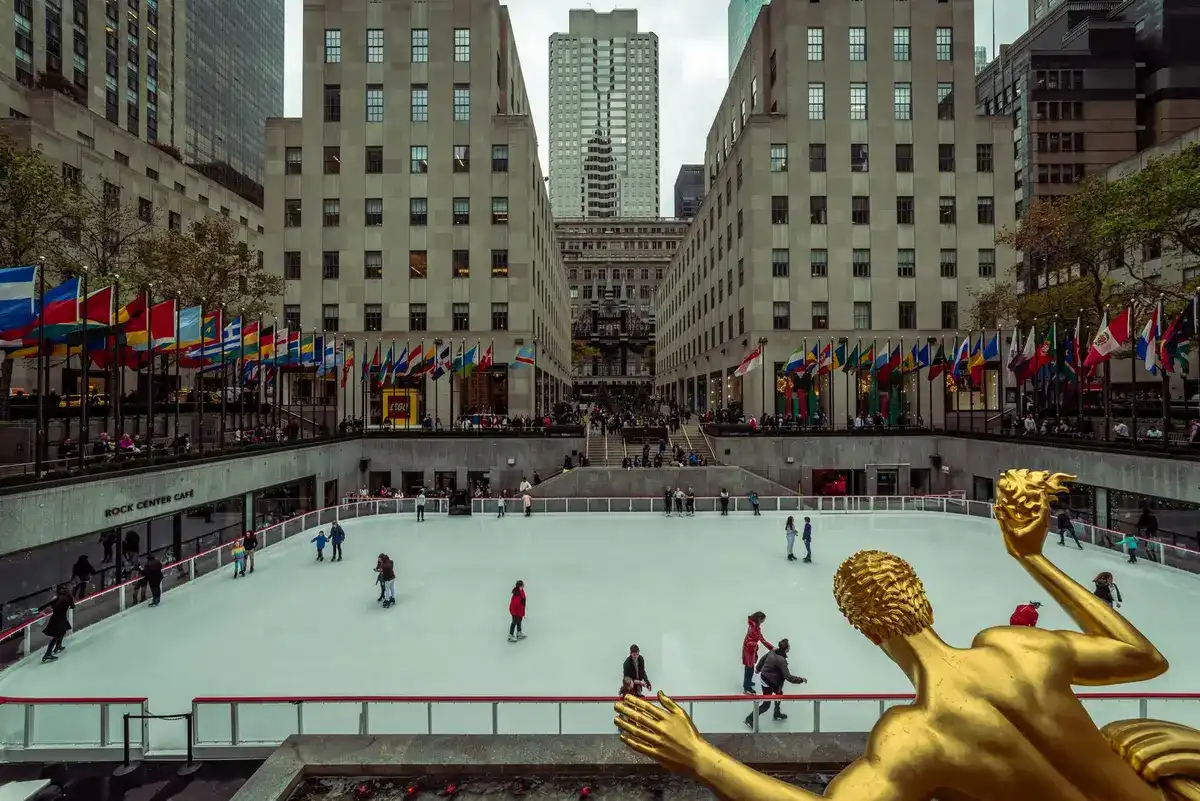
It's properly cold (in January the average high is 4°C and it drops below freezing at night), but it's when the city has the most atmosphere. The Rockefeller Center rink is open from 10 October to 1 March, from about $22, and the Christmas tree is lit on 2 December 2026. At the Bryant Park Winter Village you skate for free if you bring your own skates (rental from about $19), and from mid-November to early January the windows at Macy's, Saks and Bergdorf Goodman are a show in themselves. New Year's Eve in Times Square is free, but you need to be in the fenced pens from the afternoon and there are no toilets. In January and February hotels are at their cheapest of the year, and that's also when Restaurant Week (set menus at good restaurants) and Broadway Week (two-for-one musical tickets) take place. The downside: short days, Luna Park closed, the High Line closes at 8pm and Jane's Carousel only opens Thursday to Sunday.
Before you book: the ESTA and your passport
If you're a European citizen travelling as a tourist for less than 90 days, you don't need a visa. Apart from your plane ticket, you only need two things:
- An electronic passport (with the chip, which comes as standard on recent Spanish and Dutch passports). Your national ID card won't work, and neither will a residence card. Even if you use them to travel all over Europe, to enter the United States you'll be asked for a passport, including at check-in at your departure airport.
- An approved ESTA. This is the electronic travel authorisation for countries in the Visa Waiver Program, which includes Spain and the Netherlands. Since September 2025 it costs $40 (it used to be $21) and it's valid for two years, or until your passport expires if that comes first. You can enter as many times as you like during those two years.
You can do the whole application on your phone with the official ESTA Mobile app from CBP, the US border agency, free on the App Store and Google Play (search for "ESTA Mobile" and check it's published by U.S. Customs and Border Protection). The app scans your passport page, reads the chip via NFC and asks for a selfie, and you're done in about fifteen minutes. You can also apply on the official website, esta.cbp.dhs.gov.
Apply as soon as you've booked your flights, and at least 72 hours before you leave: without an approved ESTA the airline won't let you board. You usually get an answer within minutes. One more thing: CBP has proposed making it mandatory to list your social media accounts from the past five years, so don't be surprised if the form asks for more details than you remember.
1. Start planning beforehand to make sure you can see everything you want
It sounds like the standard advice from any travel website, but in New York it's truer than ever: almost everything now works with timed tickets, and the good slots sell out. Sunset at Top of the Rock, the Statue of Liberty crown or a specific musical on a Saturday night need to be booked days or weeks in advance. Use the itinerary above as a base, mark what you really don't want to miss and book that first. Everything else can be improvised.
2. Inform yourself as much as possible about the New York way of living
If you've been to the US before, you'll know the general differences with Europe. If not, pack a plug adapter (the US uses flat-pin type A and B plugs at 110 volts) and get used to the idea of tipping: in New York it isn't optional, because waiters' wages depend on it. In a restaurant you leave 18 to 22% of the bill, 15 to 20% in a taxi, and a dollar or two per drink in a bar. A trick to work it out: double the tax on the receipt (8.875%) and you get almost 18%. A few more things worth knowing:
- Manhattan has more than 25,000 people per square kilometre and living there is extremely expensive, so don't expect a big hotel room in Manhattan, however much you pay. On a tight budget, look in Brooklyn or Long Island City (Queens), 10 to 15 minutes by subway from Midtown. Be careful with holiday rentals: since 2023 New York has banned renting out a whole apartment for less than 30 days, so on Airbnb you'll mostly find rooms in people's homes.
- New Yorkers are always in a hurry: they have a coffee and a bagel on the go for breakfast and eat lunch on the street or at a deli. At night it all changes, because they love going out for dinner. If you want to eat at a well-known restaurant, book ahead (most use Resy or OpenTable) and keep in mind that many kitchens close at 10pm.
- Cannabis is legal and you'll smell it. Since 2021 New York State has allowed adults over 21 to use it, and on many streets the smell of weed is constant. You can smoke it wherever you can smoke tobacco, but not in parks, on beaches, in restaurants or in cars. If you buy, do it at a licensed dispensary: they display a sticker with a QR code from the state's cannabis office in the window, and many of the smoke shops you'll see everywhere are illegal. And don't take it to the airport: for the federal government recreational cannabis is still illegal, and trouble with it at the border can cost you your ESTA.
- Shops stay open late, usually until 8 or 9pm, and department stores open on Sundays too. Macy's used to give tourists a 10% discount when they showed their passport; ask at customer service, because the information centre where you used to get it has closed.
- The weather changes a lot from season to season (I go through it in when to go), and you can go from rain to clear skies in the same day, so dress in layers.
3. Use public transportation to save time and money. The metro is the most efficient way to move around
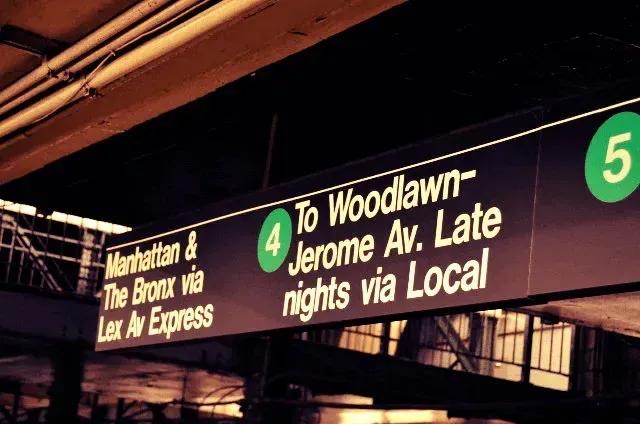
If you want to see the city in a few days, you need to waste as little time as possible getting around. Yellow cabs are great for the photo, but you'll spend half the ride in traffic. The subway runs 24 hours a day and is by far the fastest option.
What has changed most since my first trip is how you pay. The MetroCard is finished: since January 2026 it can no longer be bought or topped up. The system is now called OMNY and it's much easier: you tap your contactless credit or debit card, or your phone with Apple Pay or Google Pay, on the reader at the turnstile, and that's it. European cards work. Each ride costs $3, and here's the best part: once you've paid for 12 rides in 7 days, the rest of the week is free. In other words, you'll never pay more than $35 a week for subway and bus, without having to buy a pass in advance. The condition is that you always pay with the same card or the same phone (and if you're travelling as a group, each person with their own). The details are on the MTA website.
There are three ways to get into town from JFK airport:
- Yellow cab: a $70 flat fare to Manhattan, plus surcharges and tip. Count on $90 to $110 in total. Always take the cab from the official taxi line at the terminal and never with the people offering you rides inside the airport.
- AirTrain + subway: the AirTrain takes you to Jamaica or Howard Beach station ($8.75) and from there you continue by subway ($3). That's $11.75 and between an hour and an hour and a quarter to Midtown.
- AirTrain + LIRR train: from Jamaica, the commuter train gets you to Penn Station or Grand Central in about 20 minutes. Around $15 in total, and it's the one I recommend if you're not carrying much luggage.
If you land at Newark, the AirTrain plus NJ Transit train to Penn Station costs $16.80.
4. Get your Broadway tickets in advance and save up to 50% off the original price
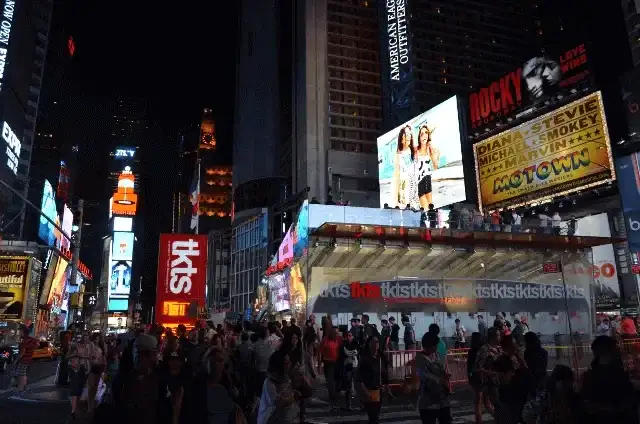
A ticket for a Broadway musical costs between $80 and $200, more for the most famous ones. That's a lot of money if you're travelling as a family. Luckily there are two ways to pay quite a bit less:
- The TKTS booths, run by the non-profit TDF, sell official same-day tickets at 20 to 50% off. Only two are left today: the one in Times Square, under the red steps in Duffy Square (Broadway and 47th Street), open 3pm to 8pm on Mondays, Tuesdays and Fridays and 11am to 8pm on Wednesdays, Thursdays, Saturdays and Sundays; and the one at Lincoln Center (61 West 62nd Street), Tuesday to Saturday from 11am to 6pm. The South Street Seaport and Brooklyn booths from my old guide have closed. The TKTS app shows you in real time what's available before you join the queue.
- The TodayTix app, with two systems: rush, which releases cheap tickets on the morning of the show to whoever gets there first, and the lottery, where you enter and, if you win, buy tickets at the lowest price, sometimes for $40 or $50.
If you know exactly which musical you want to see and you're going at the weekend, buy it directly from the theatre's official website well in advance: the most popular shows rarely come up at a discount. And if you're going in January or February, check Broadway Week, with two-for-one tickets.
5. Use discount websites when visiting the typical tourist attractions, skip the queues and save time and money
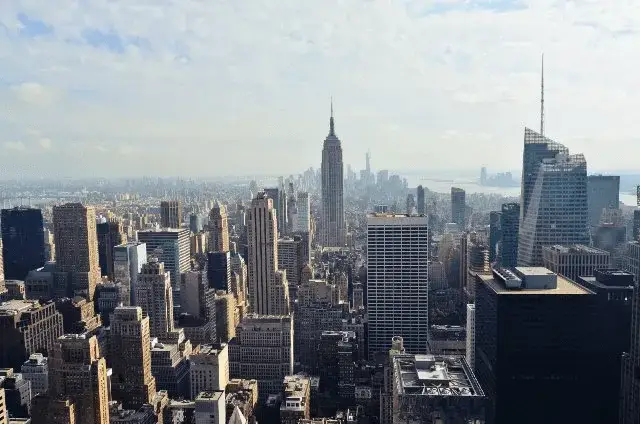
In 2014 my top tip was to buy the New York Pass, a pass that includes entry to dozens of attractions (Top of the Rock, the Empire State, the Statue of Liberty ferry, the 9/11 Museum, the Natural History Museum, the Intrepid, bike rental in Central Park, Madame Tussauds…). Today it's sold by Go City and comes in two versions:
- All-Inclusive: visit as much as you like during a set number of days. From $169 for one day and around $400 for seven.
- Explorer: choose a number of attractions and you have 60 days to use them. From $89 for two attractions up to around $230 for seven.
I did the maths with the itinerary in this article, and the paid tickets add up to about $190 (Top of the Rock, the Statue of Liberty, the 9/11 Museum, Natural History and the Empire State). At this pace the pass doesn't pay off: you don't have time to get your money's worth, because the best of New York is free. It only makes sense if you like going from attraction to attraction and add things like the Edge, the full Intrepid museum or Madame Tussauds. Check the prices before you decide, because Go City runs discounts very often.
What has improved is the queuing: almost every observation deck and museum sells timed tickets on its website, so by buying online you skip the ticket office anyway.
6. Locate Fifth Avenue and you’ll get just about anywhere
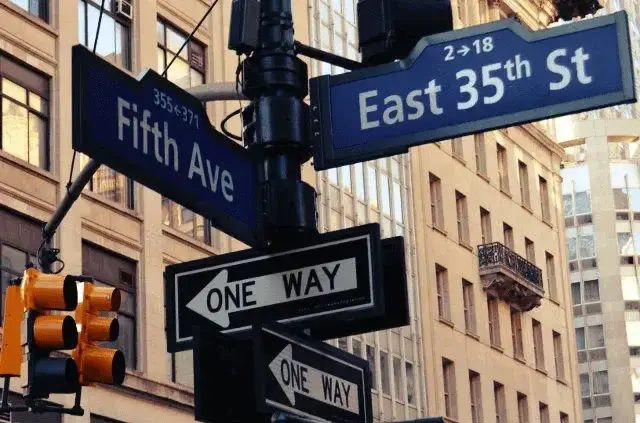
At first sight, finding your way around New York can look complicated, but it's very logical once you know where Fifth Avenue is. Except for the south of Manhattan, the streets form an almost perfect grid, and it's easy to get your bearings when you remember these tricks:
- The streets running north to south through Manhattan are called avenues and are numbered from east to west, starting with First Avenue by the East River. The ones crossing it from east to west are called streets and are numbered from south to north, starting just above Houston Street.
- Fifth Avenue is the dividing line: it's the avenue that runs along the east side of Central Park and down to Washington Square.
- Streets to the right (east) of Fifth Avenue have an "E" before the number, and those to the left a "W" (I'll let you guess what they stand for ;-)). That tells you straight away which side to head to: 20 W 34th Street, the Empire State, is very close to Fifth, on its west side.
- If a street has no number, you're almost certainly in the south of Manhattan. The exception is Broadway, the old Lenape trail, which cuts diagonally across the grid from one end of the island to the other.
- On your phone, Google Maps works perfectly for the subway: it tells you which line to take, in which direction (Uptown is north and Downtown is south) and whether the train is express or local.
7. Don’t forget your smartphone, because New York offers lots of places to stay connected on the go for free
In New York you'll use your phone all the time: Google Maps for the subway, tickets with QR codes, restaurant bookings and the TodayTix app. With a European plan, roaming in the US is very expensive, and in my 2014 guide I recommended buying a prepaid SIM card on arrival. You don't need that anymore. The easiest option now is an eSIM: a virtual SIM you buy online and install on your phone before leaving home, by scanning a QR code. When you land, you switch it on in your settings and have data straight away, without looking for a shop or removing your usual SIM (which you can keep active to receive calls and texts from your bank).
The two I recommend, depending on how you use your phone:
- Holafly: unlimited data by the day, around $27.50 a week. It's the easy option if you use your phone a lot (maps, social media, video calls) and don't want to keep an eye on your usage. The downside is you can only share 1 GB a day with other devices.
- Roamless: you pay per gigabyte used, around $2 per GB in the US, and any credit you don't use never expires, so you can spend it on your next trip. It's cheaper if you mostly use maps and WhatsApp.
Both are data only, with no American number, so you make calls via WhatsApp or FaceTime. Before you buy, check that your phone supports eSIM (almost all phones from the last five years do).
And if you run out of data, New York still has free wifi in lots of places. The more than 2,000 LinkNYC kiosks on the pavements, which replaced the old phone booths, offer free wifi and have a socket to charge your phone, and there's wifi in Bryant Park, parts of Central Park and other parks too (full list here).
8. Not all cool things in New York have to come with a price tag
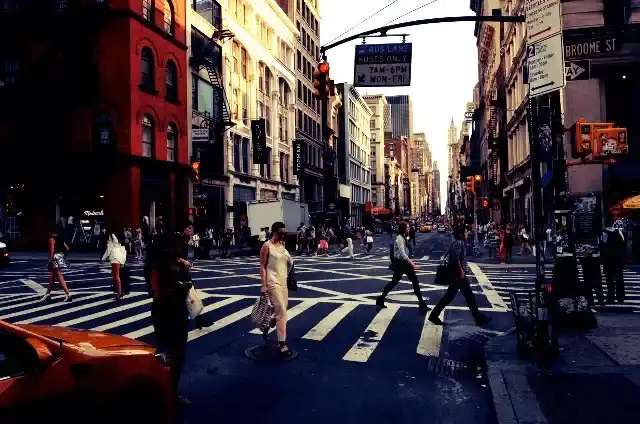
New York has a reputation as one of the most expensive cities in the world, and it is, but a lot of the best things it has cost nothing. This is my list of free essentials, most of them included in the itinerary above:
- The Staten Island Ferry, to see the Statue of Liberty for free (day 2).
- Walking across the Brooklyn Bridge and strolling through DUMBO and the Brooklyn Heights Promenade (day 5).
- The High Line and Little Island, the two parks on Manhattan's west side (day 4).
- The Intrepid's Pier 86, which you can walk along without paying for the museum (day 4).
- The 9/11 Memorial and the Oculus. The museum is free on Mondays from 5:30 to 7pm (day 2).
- The Whispering Gallery at Grand Central and the guided tours of the Public Library (day 1).
- Central Park, Washington Square Park and the Union Square Greenmarket (days 3 and 6).
- Governors Island, with the free ferry at weekends before 11am (day 7).
- The Brooklyn Museum, free on the evening of the first Saturday of some months, with registration.
- Summer outdoor concerts, theatre and films: SummerStage, Shakespeare in the Park and Monday movie nights in Bryant Park.
And if you'd like to see the city with a local, the Big Apple Greeter volunteers will show you their neighbourhood on a two- to four-hour walk, free and with no tipping. You need to request it three or four weeks in advance and stay at least two nights in the city.
9. Take a break from all the hard work
After packing your suitcase, booking your tickets and downloading your eSIM, take a breather: you're about to visit one of the most intense cities in the world. Seven days in New York are more tiring than they look (you'll walk more than 15 km a day), so don't fill every hour. The times in the itinerary are a guide: leave gaps to sit on a bench in Central Park or on the steps in Times Square and watch people go by, which is part of the trip too.
If you liked this article, share it with anyone who's thinking about a trip to New York.
Thanks for the article. I found it quite helpful for my lessons. Greetings from Barcelona too
Thanks for the feedback Camilo, really appreciate it :)!